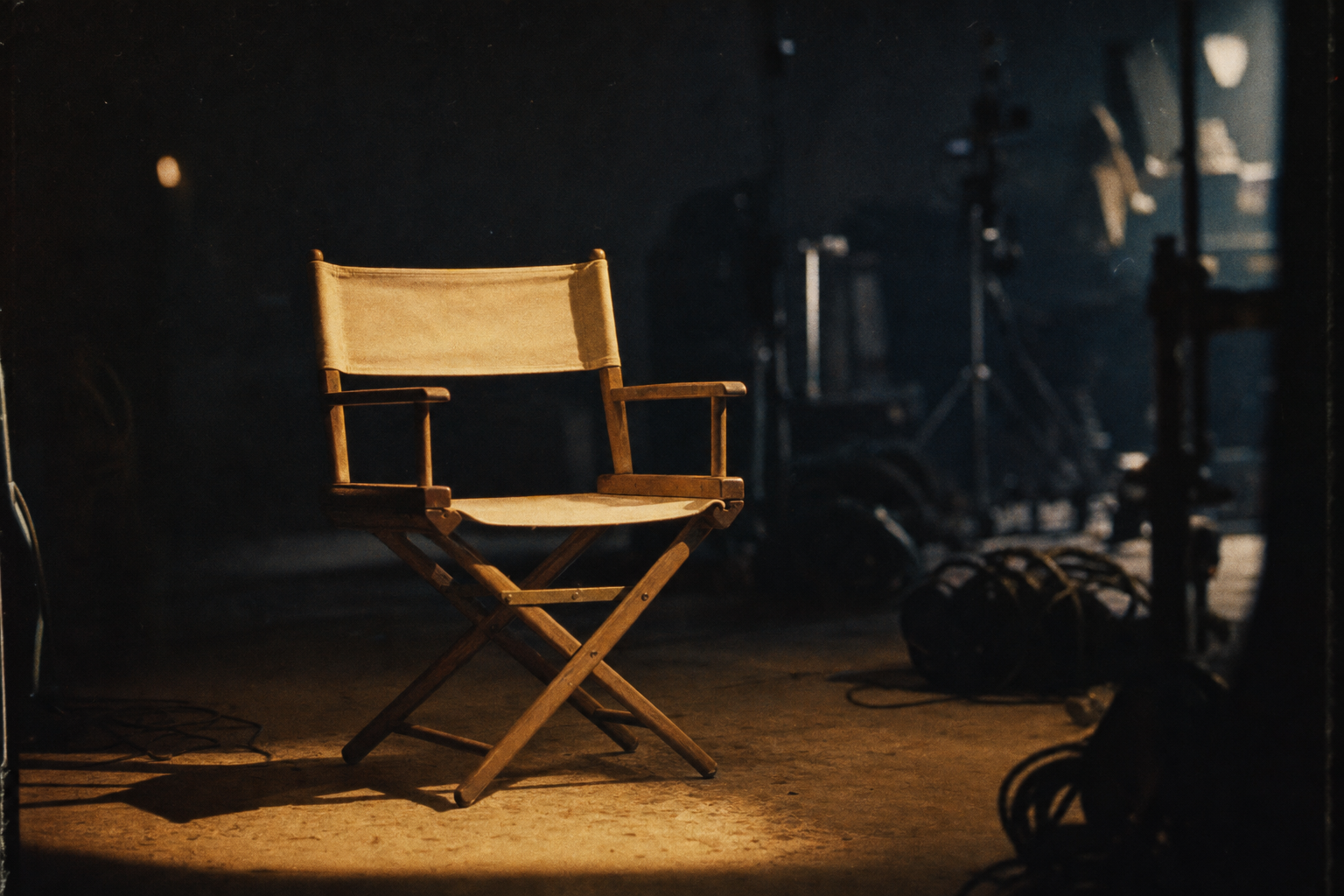
Cinema is the only trillion-dollar industry where the dominant decision-making protocol is still a feeling. Studios greenlight nine-figure budgets on the strength of a pitch, a poster mood-board, and a phone call from someone's agent. Audiences are talked about in focus-group adjectives. Films are described as having 'heat,' or 'noise,' or 'energy.' These are weather words, used to make purchasing decisions that move billions of dollars.
Every other industry of comparable size has been pried open by data. Finance has Bloomberg. Sports has Statcast. Music has streaming-derived analytics that tell the label exactly which 12 seconds of a song to optimise. Hollywood, alone, has held the line. Not because the math doesn't work — the math works fine — but because the math wasn't doing the politics. The hunch was doing the politics.
We built Hollywood Metrics to do the math anyway.
The math wasn't doing the politics. The hunch was doing the politics. We built this to do the math anyway.
The platform you're reading about indexes 107 years of cinema across 74,571 films. It ingests ratings from IMDb, critic consensus from Rotten Tomatoes, audience reception from CinemaScore where the data exists, lifetime box office, Academy and Cannes laurels, and the underlying metadata for every credit on every picture. It runs all of it through a normalisation layer that produces a single composite quality score on a 0–100 scale. That score is comparable across decades — a 1947 noir and a 2024 superhero film can sit on the same axis and be measured against each other without anyone having to argue about taste.
On the screenplay side, we've parsed 1,571 produced and unproduced scripts into a quantitative feature set of twenty measurable dimensions: scene cadence, dialogue density, sentiment arc, vocabulary entropy, transition explicitness, character intro rate. Then a Random Forest, trained on those features and their commercial outcomes, lands every script in one of six tiers from S (masterwork) to E (needs work). The model is honest about its accuracy: 49% overall hit rate against historical box-office bands, climbing to 69% on action films, falling to 24% on comedy. We publish those numbers because comedy is genuinely hard and we're not going to pretend otherwise.
On top of the analytical core sits a layer of bespoke agents — purpose-built autonomous agentic workflows, not a chatbot wearing different hats. One agent dissects a script's structural metrics. Another rewrites scenes in the voice of any of ninety screenwriters whose techniques we've codified into style guides. A third forecasts opening weekend with a thousand simulated audience personas. A fourth assembles investor-ready pitch decks from the analysis output. Each one is narrow, focused, and good at exactly one thing.
We publish the accuracy numbers because comedy is genuinely hard and we're not going to pretend otherwise.
None of this is intended to replace the writer. The 2023 WGA contract made the position explicit: writers are creators, models are tools. We agree, in writing, in our terms of service, and in every product decision. The platform never stores your screenplay server-side after analysis completes. Originality scoring exists to prove your work is yours. Optional Solana-blockchain timestamping exists to prove when it was yours. The math, in this house, works for the human.
It is also not intended to be neutral. We have opinions. We think the auteur theory deserves more empirical respect than it gets in the era of brand-led franchise machines. We think the modern comedy script is undervalued by Random Forests because comedy depends on timing and timing doesn't tokenise. We think the average studio note would be improved by being replaced with a histogram. We think a 90-page screenplay with 64% dialogue and a positive sentiment arc is more likely to test well than a 130-page screenplay with 38% dialogue and a flat arc, and we have the data to back it up.
We think the average studio note would be improved by being replaced with a histogram.
What this site is for, in the end, is to let you check those opinions against the data yourself. Browse the catalogue. Read the methodology. Upload a script and watch the engine return numbers instead of vibes. The dashboard is dense on purpose — it is designed for the writer who wants to know exactly why their second act isn't landing, the executive who needs a defensible read on a property before a Monday meeting, and the producer who has been told by three different agents that the script is 'great' and would like a fourth, quieter, more numerical opinion.
That's the project. Numbers. Honestly reported. Made beautiful enough to be worth looking at.
Hollywood Metrics was conceived in a converted screening room, assembled at three in the morning, and is operated as a solo project with help from a federation of autonomous agents. If you find a thing that's wrong, write in. We will fix it and credit you in the changelog.