James Cameron has made three Avatar films. Each has grossed over a billion dollars. Each has scored lower with critics than the last. Avatar: Fire and Ash — $1.47 billion and climbing, 70% on Rotten Tomatoes — is the definitive case study in what happens when a filmmaker optimizes entirely for spectacle over structure.
Our data has a name for this: the Cameron Exception.
The Spectacle Profile
Cameron's screenplay for Fire and Ash exhibits the most extreme version of the commercial-only optimization we have seen in 2025:
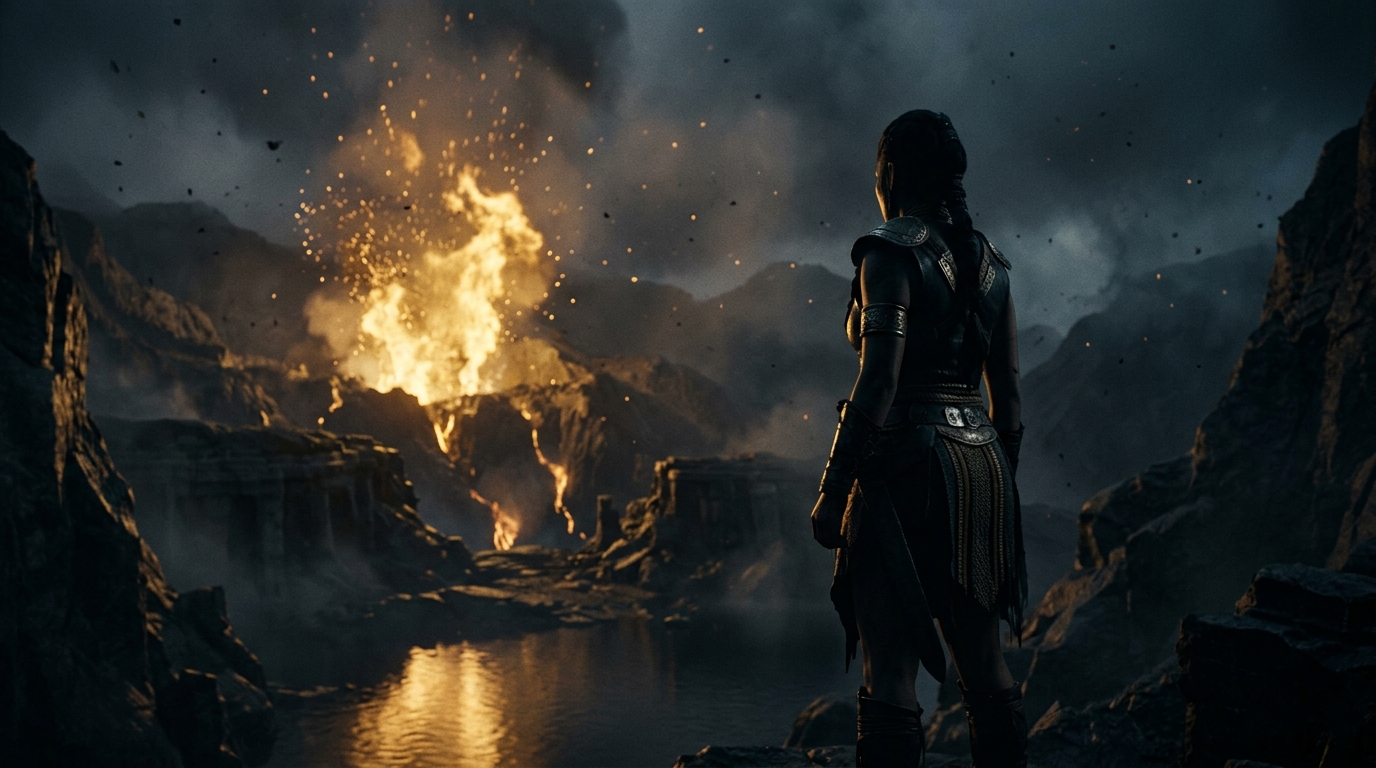
Action Ratio: Maximum. The script is estimated to be 70-80% action description — world-building paragraphs describing volcanic landscapes, Na'vi clan rituals, battle choreography, and underwater sequences. Our data shows action ratio → box office: r = 0.061 (positive). Action ratio → IMDb: r = −0.035 (negative). Cameron pushes the positive correlation to its absolute limit while absorbing the critical cost.
CAPS Density: Extreme. Cameron's action lines are filled with capitalized emphasis: "THE VOLCANO ERUPTS. Jake GRABS Neytiri as MOLTEN ROCK cascades." CAPS density is our single strongest predictor of worldwide gross (r = 0.160). Fire and Ash likely has the highest CAPS density of any major 2025 release. And it has the second-highest gross.
Dialogue Ratio: Depressed. Critics have noted — for three films now — that Avatar's dialogue is its weakest element. "I see you" became a meme for a reason. The dialogue ratio is well below median, and what dialogue exists is expository ("We must unite the clans") or declaratory ("This is our home"). Dialogue ratio → IMDb: r = 0.042 (positive). Cameron leaves this on the table.
Vocabulary Richness: Paradoxically Elevated. Here is where Avatar breaks our model in an interesting way. Cameron invents words. Na'vi language, Pandoran flora and fauna names, clan terminology — the script's vocabulary richness is artificially inflated by constructed language. Our engine would flag high vocabulary richness as a negative predictor for critical scores (r = −0.134), but Cameron's constructed vocabulary is not the same as pretentious human vocabulary. It is world-building. The correlation does not know the difference.
The 70% Floor
Each Avatar sequel has scored lower than its predecessor: 82% (original), 76% (Way of Water), 70% (Fire and Ash). Our structural features predict this trend:
- The action ratio stays constant (high) → critical scores remain capped.
- The novelty decreases (audiences have seen Pandora now) → sentiment variance decreases.
- The question density drops (the mystery of Pandora is resolved) → critical engagement drops.
If the next Avatar sequel maintains the same structural profile, our model would predict a continued decline — toward 65% territory. The spectacle sustains the gross, but the script structure slowly erodes the critical score.
The Cameron Exception Explained
Why does our model call Cameron an "exception"? Because no other filmmaker can achieve $1.47B with this structural profile. The Avatar screenplays, by our features alone, predict B-Tier commercial performance and C-Tier critical performance. Cameron's visual innovation — the actual spectacle that exists outside the screenplay text — is the variable our 20 text-based features cannot capture.
This is an important limitation of structural screenplay analysis. Our engine reads words on a page. Cameron's genius lives in images on a screen. The gap between what the script says and what the audience experiences is wider for Avatar than for any other film in our 20,000-film dataset.
The screenplay predicts 70% RT. The screenplay cannot predict $1.47B. Cameron exists outside the model.
Predicted tier: C-Tier (critical), B-Tier (commercial). Actual: 70% RT, $1.47B. Cameron breaks the math. Again.