The Principle
Jingle Ma Choh-Sing spent the most formative stretch of his career as one of Hong Kong cinema's most in-demand directors of photography before transitioning to directing, and that trajectory reveals everything about his visual philosophy. He is fundamentally a craftsman who understood that the best cinematography serves the body — the physical body of an actor in motion, the emotional body of a story in flux. Working through the golden final years of Hong Kong's action cinema boom, Ma developed a visual approach that could hold chaos and tenderness in the same frame without either quality diminishing the other.
His work across films like Comrades, Almost a Love Story, The Legend of Drunken Master, and Police Story 4: First Strike demonstrates an almost paradoxical sensibility: he is equally comfortable shooting Jackie Chan's breathtaking practical stuntwork with visceral, bone-crunching immediacy as he is finding the melancholy poetry in two people almost missing each other on a rain-slicked Hong Kong street. This duality is not a contradiction but a skill — Ma understood that the emotional intelligence required to light a love scene and the physical intelligence required to capture a fight sequence are more related than they appear. Both demand acute attention to bodies in space and the way light reveals or conceals vulnerability.
What distinguishes Ma's cinematography from his peers in Hong Kong during this period is a quality of attention that feels almost journalistic, a willingness to let the environment speak. Working in locations as varied as the Bronx streets of Rumble in the Bronx, the Australian wilderness of First Strike, and the dense urban canyons of Hong Kong itself, Ma consistently finds ways to root his compositions in a specific, legible sense of place. His frames do not exist in generic action-movie nowhere. They carry the smell and texture of real geography, real weather, real light bouncing off real surfaces.
His later transition to directing, most visibly with Tokyo Raiders and Seoul Raiders, confirmed what his cinematography had always suggested: he thinks in terms of production design, performance, and narrative momentum simultaneously. The cinematographer's eye never left him. Every setup he designed as a DP carries within it a director's logic about where the story needs to go and how the audience needs to feel getting there.
Camera and Movement
Ma's camera is rarely still, but it is rarely chaotic for chaos's sake. His preferred mode is a controlled kinesis — movement that has purpose and grammar, that accelerates and decelerates in response to what performers are doing rather than imposing its own rhythm on them. In the action sequences of The Legend of Drunken Master, his camera operates almost as a sparring partner to Jackie Chan, moving in close to capture the tactile specificity of a hand strike or a fall, then pulling back to give the audience the full spatial map of an elaborate fight choreography. This push and pull, this breathing quality, is one of his most distinctive attributes.
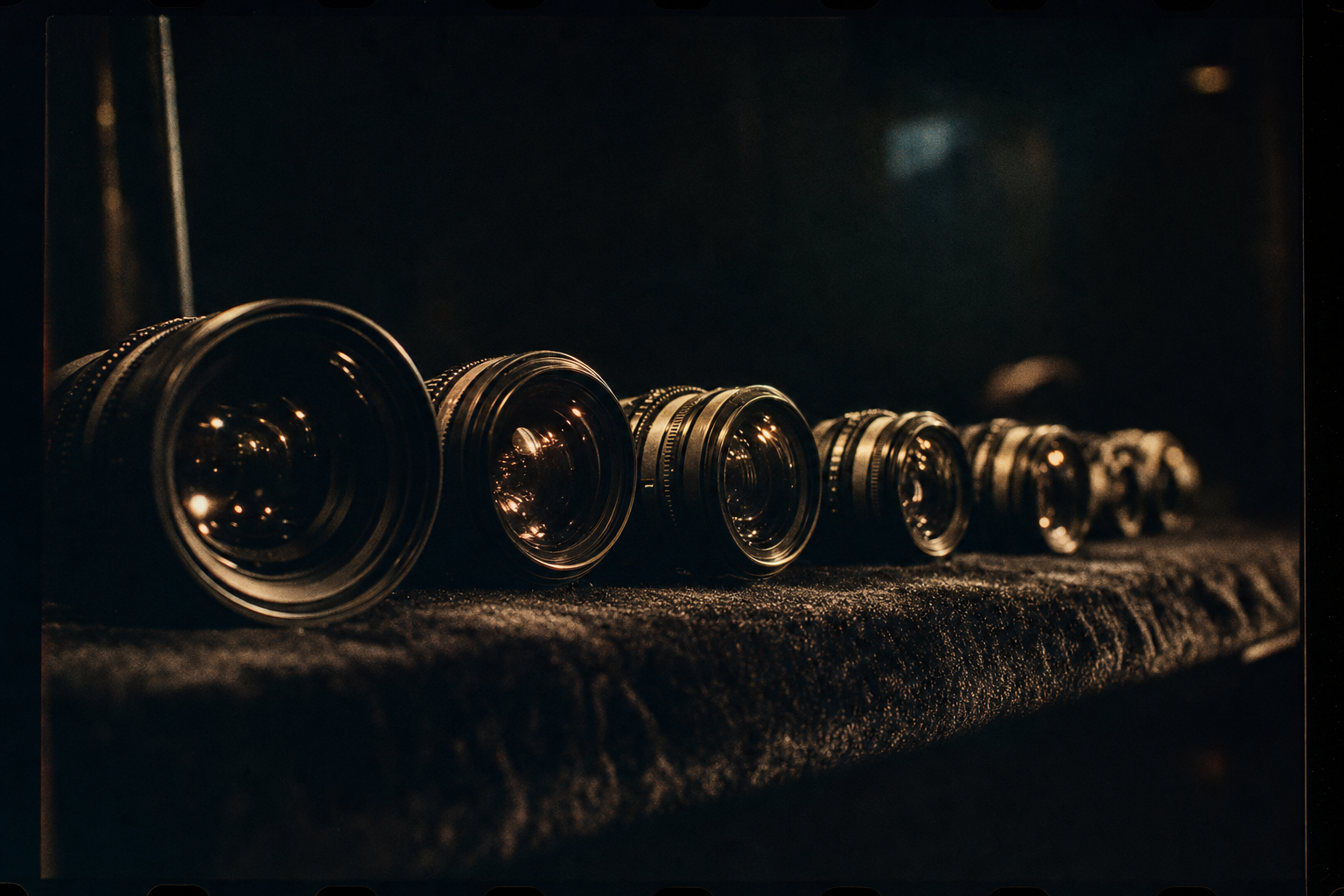
He favors medium focal lengths that keep the environment in conversation with the subject — lenses that neither compress space into abstraction nor push so wide that distortion becomes an aesthetic in itself. This choice keeps his images grounded. In Comrades, Almost a Love Story, the streets of Hong Kong and later New York are not backdrop but participant, and Ma's lens choices ensure that Leon Lai and Maggie Cheung exist within those environments rather than in front of them. Handheld work appears frequently but is deployed with discipline, reserved for moments of emotional or physical instability rather than used as a default texture.
Crane and dolly work, when it appears, tends toward the elegiac and the observational rather than the spectacular. Ma does not typically use large camera moves to announce themselves. A slow pull back or a gentle crane rise at the end of a scene functions as punctuation — a breath held and then released — rather than as showmanship. This restraint is part of what gives his more romantic work its ache. The camera mourns or celebrates quietly, without fanfare.
Light
Ma's lighting instinct runs toward naturalism that has been carefully managed to look unmanaged. He reads existing light first and builds artificially from what is already present in a location, preserving the character of a space rather than overwriting it with a generic film light. This approach is especially evident in the urban Hong Kong sequences throughout his filmography, where neon signage, practical fluorescents, and the ambient glow of dense commercial streets become primary light sources that Ma shapes and controls without making their management visible.
For interior work, he favors soft sources that wrap around faces without losing contrast entirely — a characteristic Hong Kong approach rooted partly in budget efficiency and partly in an aesthetic preference for skin tones that read as warm and alive rather than clinical. In Comrades, Almost a Love Story, this sensitivity to warm, flattering interior light creates an intimate quality that mirrors the film's emotional register: these are people seen up close, seen kindly, even as the world around them is indifferent. The contrast between warm interiors and the colder, harder light of exteriors serves the story's themes of displacement and longing.
Action sequences reveal a different lighting logic. For the large-scale practical work in First Strike and Rumble in the Bronx, Ma works with harder sources that emphasize physical dimension and shadow, ensuring that the geography of a fight or a stunt is legible at normal projection speeds. Shadows here are structural rather than atmospheric — they define edges, separate planes, and help the audience track bodies through complex movement. The light is utilitarian but never ugly, always preserving enough information in the shadows to maintain image texture.
Color and Texture
The color palette across Ma's most celebrated work gravitates toward warmth cut with desaturation — images that feel lived-in rather than supersaturated, where yellows and ambers carry emotional weight without tipping into the garish. This is characteristic of late 1990s Hong Kong production culture, but Ma deploys it with particular intentionality. The warm tones in Comrades, Almost a Love Story function almost as a color-coded nostalgia, a visual argument that these moments — even the painful ones — are worth preserving and mourning.
His work on comedy-adjacent films like The God of Cookery and Last Hero in China shows a willingness to push color more aggressively, allowing heightened, slightly cartoonish palettes to support the tonal registers of those stories. This flexibility suggests a cinematographer who understands that color temperature and saturation are storytelling tools first and aesthetic preferences second. The palette serves genre and tone rather than the other way around.
Texture in Ma's work comes largely from his commitment to real locations and practical sources, which introduce grain, flare, and imperfection that a more controlled studio approach would eliminate. These imperfections read as authenticity. The grittiness of the Bronx location work in Rumble in the Bronx and the textured urban density of Hong Kong in his domestic productions give his images a physical weight that purely artificial environments cannot replicate. Even when shooting with the polish expected of a major commercial production, there is always some residue of the real world in his frames.
Signature Techniques
- The Grounding Wide: Ma frequently opens action sequences or new locations with a wide establishing shot held longer than strictly necessary, giving the audience time to genuinely understand the space before the action fragments it. This is not conventional establishing-shot efficiency; it is spatial generosity.
- Warm Practical Integration: Neon signs, practical lamps, and lit windows are treated as primary light sources and motivated aesthetically, with artificial supplements added to match rather than replace what is already there. The result is environments that glow from within rather than being lit from outside.
- Handheld Emotional Punctuation: Handheld camera is deployed specifically at moments of emotional crisis or physical danger, functioning as a textural shift that signals heightened stakes. Its appearance is earned by contrast with the more controlled shooting that surrounds it.
- Responsive Medium Framing: A preference for medium shots and medium close-ups that keep both face and environment readable simultaneously, ensuring that emotional reaction and spatial context inform each other throughout a scene.
- Crowd and Environment as Character: In urban sequences across his Hong Kong films, Ma frames through and around crowds rather than clearing space for subjects, treating pedestrian density as part of the visual meaning of a scene — isolation is made poignant precisely because so many bodies are present.
- Low-Angle Hero Framing in Action: For Jackie Chan's signature sequences in Drunken Master II and First Strike, Ma frequently drops below the conventional eyeline to shoot slightly upward, giving physical actions a mythic scale without losing the documentary specificity of how the stunts are actually executed.
- The Long Romantic Lens: For intimate scenes, particularly in Comrades, Almost a Love Story, Ma occasionally reaches for longer focal lengths that compress space between characters, visually collapsing the distance between two people even when narrative circumstances are pulling them apart — using optics to state what dialogue cannot yet say.