The Principle
Quyen Tran's work is defined by a fundamental trust in the material. Whether shooting the absurdist medieval comedy of The Little Hours, the time-loop summer heat of Palm Springs, or the quiet desperation of a mother fleeing her circumstances in Free Ride, Tran consistently subordinates visual showmanship to emotional truthfulness. Her cinematography does not announce itself. It arrives in the room the way good natural light does — you notice the warmth before you notice where it came from.
What distinguishes Tran within the landscape of American independent filmmaking is her ability to shift tonal registers without shifting her foundational language. Dark Was the Night demands a cold, foreboding Pacific Northwest atmosphere entirely unlike the bleached California sun of Palm Springs, and yet both films share the same essential quality: the camera always seems to know where the human being is, and it cares about being close to them. This is a cinematographer whose primary instrument is proximity — not necessarily the physical proximity of tight lenses, but the emotional proximity of a frame that never feels indifferent to its subject.
Tran's Sundance work, particularly Deidra & Laney Rob a Train and The Little Hours, reveals a filmmaker comfortable with ensemble dynamics and the particular challenge of tracking comedy through composition. Comedy is notoriously difficult to shoot because it punishes self-consciousness in ways that drama does not. Tran's response is to keep things clean, readable, and anchored in performance. Her frames give actors room to be funny, which is its own sophisticated act of restraint.
There is also in Tran's work a consistent attention to the way environments shape people. The monastery walls in The Little Hours, the suburban tract houses in Deidra & Laney, the desert resort architecture in Palm Springs — these locations are never merely backdrop. Her lighting and framing treat architecture and landscape as active participants in the story, forces that press against characters or, occasionally, liberate them.
Camera and Movement
Tran favors handheld work that reads as observational rather than agitated. This is a meaningful distinction. Many cinematographers use handheld to generate urgency or anxiety; Tran uses it to suggest presence, as though the camera has earned the right to be in the room with these people. In Free Ride, which follows a mother navigating dangerous circumstances to protect her daughters, this approach creates a documentary-adjacent intimacy that amplifies the film's emotional stakes without melodramatic emphasis. The camera moves because life moves, not because the editing demands energy.
On wider ensemble pieces like The Little Hours and A Bag of Hammers, Tran demonstrates a complementary fluency with more anchored, composed setups. Here, medium shots and two-shots carry much of the narrative load, with movement coming from blocking rather than from the camera itself. This confidence in stillness is a mark of maturity — the willingness to let a well-composed static frame do work that a lesser cinematographer might try to solve with movement. When the camera does move in these contexts, it tends to be a slow, motivated push or pull, responding to a shift in emotional temperature rather than preceding it.
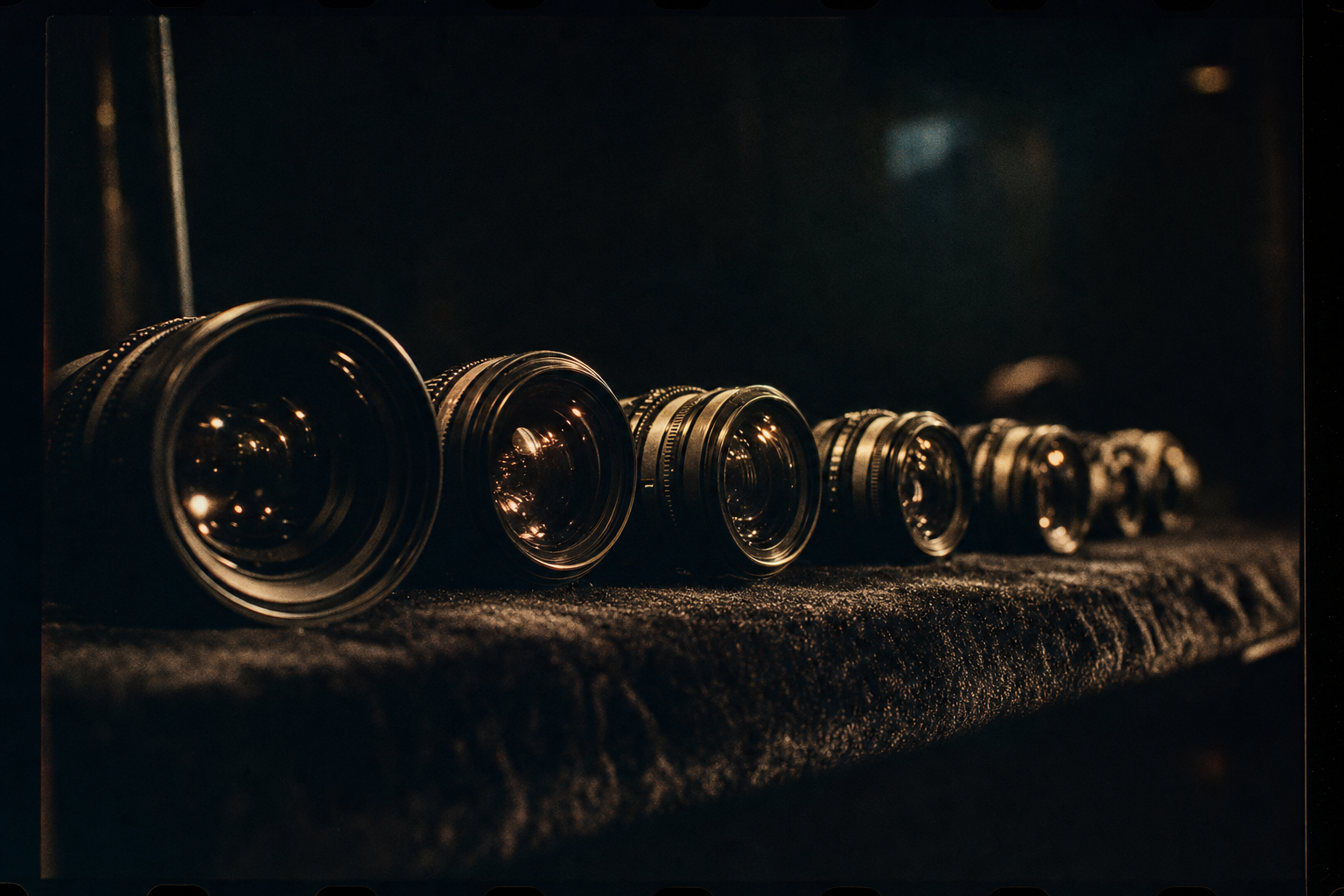
Lens choices across Tran's work suggest a preference for moderate focal lengths in the 35mm–50mm range, producing images that feel close to natural human perception without the distortion of wider glass or the compression and separation of longer lenses. This keeps her images relatable and grounded. In Palm Springs, the desert vistas occasionally call for wider coverage of landscape, but even these shots tend to position human figures in ways that keep us aware of scale as emotional information — these people are small against an enormous, indifferent sky they are trapped beneath.
Light
Tran works with natural and available light as a primary source wherever the narrative permits, supplementing and shaping rather than replacing. Her work in The Little Hours, shot largely in the Tuscan countryside, makes extraordinary use of the particular quality of Mediterranean daylight — hard, directional, casting deep shadows in the interiors of stone buildings. The result is imagery that feels period-appropriate without resorting to candlelit artificiality or the washed golden tones that lesser films use as shorthand for "historical." The light feels like it has always been in those buildings, waiting.
For Dark Was the Night, the tonal demands are entirely different, and Tran responds with a palette of cold blues and deep shadows, using the Oregon forest as a source of genuine visual dread. Interior scenes lean on practical sources — window light, lamplight — allowed to fall off quickly, leaving faces partially in darkness in ways that communicate the psychological weight the characters carry. This is controlled underexposure as emotional language, not accident. The darkness in Dark Was the Night is not a failure of illumination; it is the point.
In contemporary dramatic material like Life in a Year and Free Ride, Tran tends toward softer, more diffused light that flatters emotional vulnerability in faces. Overcast exteriors are used with confidence rather than treated as problems to solve, their even light lending a quality of quiet inevitability that suits stories about people navigating circumstances beyond their full control. Where artificial light is introduced in these films, it tends to be warm — practicals and motivated sources that reinforce the intimacy of domestic space without calling attention to themselves as design decisions.
Color and Texture
Tran's color sensibility trends toward warmth in comedic and contemporary dramatic work, with desaturation used selectively to mark emotional distance or environmental harshness rather than as a blanket stylistic choice. Palm Springs glows with the particular amber and gold of the desert in late afternoon, a choice that reads simultaneously as beautiful and slightly oppressive — which is precisely the tonal paradox the film requires. The color does not lie about the situation even while it makes the situation look gorgeous.
The textural quality of her images tends toward a filmic softness even when shooting digitally, avoiding the clinical sharpness that some contemporary cinematographers pursue. This is a deliberate humanizing choice. Skin tones in particular are handled with care, retaining warmth and variation rather than being smoothed into uniformity by aggressive color grading. Her Vietnamese-American background may inform a particular sensitivity to rendering non-white skin tones with complexity and beauty — a correction to decades of cinematographic convention calibrated for lighter complexions.
In period or genre work, Tran allows the color grade to do more expressive work. Dark Was the Night uses cooler, more drained tones to move the image away from the familiar and toward the uncanny. The Little Hours sits in a warmer, earthier register that evokes paintings and frescoes without pastiche. The consistency across these tonal shifts is Tran's instinct for restraint — she never pushes a color choice so far that it becomes the subject of the image rather than a property of it.
Signature Techniques
- Motivated available light integration: Tran consistently builds artificial lighting setups that appear to be doing nothing — reinforcing windows, cheating practicals — so that the final image reads as purely natural. The craft is in the invisibility of the work.
- Observational handheld in intimate drama: A low-movement, breath-like handheld style used in emotional scenes to suggest documentary presence without introducing visual anxiety, particularly evident in Free Ride and Life in a Year.
- Landscape as emotional pressure: Wide shots in Palm Springs and Dark Was the Night that position characters within environments scaled to communicate confinement, threat, or existential exposure, using the frame's edges as borders that press inward.
- Deep interior shadows in genre work: Deliberate use of fast light fall-off in Dark Was the Night interiors, allowing portions of faces and bodies to disappear into shadow as a psychological and tonal statement rather than a lighting failure.
- Comedy through compositional stability: Static or minimally moving setups in ensemble comedies (The Little Hours, A Bag of Hammers) that give performance maximum room to land, trusting stillness over camera energy to serve comic timing.
- Period authenticity through existing light logic: In The Little Hours, using the actual directional quality of Mediterranean sunlight through stone apertures to create period texture without relying on candle-simulation or romanticized diffusion.
- Warm-cool contrast as tonal counterpoint: Strategic deployment of cooler fill light against warm key sources to give faces dimensionality and emotional complexity, particularly in transitional moments where characters occupy uncertain emotional territory.