Skip to content
HOLLYWOOD METRICS
HomeAboutCraftNewsAnalyticsScriptsBooksPricingAPIMCP
The BookThe NullInsidePrinting & PostBasket
A long ledger table under one low lamp, ruled columns running away into darkness

A book from Hollywood Metrics

NOBODY KNOWS ANYTHING. WE CHECKED.

What 74,571 films and 1,571 screenplays reveal about how movies actually work

366 pages42 chapters252 computed facts6 x 9 in paperback
$19.99 — buy it directRead the central finding free

THE WHOLE ARGUMENT, IN ONE PICTURE

This project spent eighteen months measuring screenplays against how the finished films were received. Twenty structural measurements, 1,571 produced films. Here is everything it found, drawn on the actual scale a correlation lives on rather than one cropped to make the bars look like something.

Twenty screenplay measurements against how the finished film was receivedOn a correlation axis running from minus one to plus one, all twenty measurements of the screenplay text fall between -0.068 and 0.059. The production budget alone correlates at 0.64.THE FULL SCALE A CORRELATION CAN OCCUPY-1-0.50+0.5+1the budget, aloneall twenty togethertwenty measurements of the screenplay, hereTHE SAME TWENTY, MAGNIFIED TEN TIMES-0.10-0.050.00+0.05+0.10strongest of the twenty: vocabulary richness, -0.068
Pearson correlation between each of twenty structural measurements of a screenplay and a composite score for how the finished film was received, over 1,571produced films. The two gold marks are the square roots of the R-squared of two models of the same catalogue: the production budget alone, and all twenty screenplay features together. Sources: the book’s fact base, keys screenplay.correlation_matrix_shipped, models.r2_budget_only and models.boxoffice_model_r2.

The book is what happens when a project publishes that instead of burying it: how the number was found, why an earlier version of it was wrong, what it costs to admit that, and what does predict a film’s performance once the screenplay has been ruled out.

NINE THINGS THE CATALOGUE SAYS

Each of these is a chapter. Each one carries the sample it was computed over, the method, and the reason it might be wrong, because a number without those is a rumour with a decimal point.

r = 0.068Chapter 14

Nothing in the text of a screenplay predicts how the film was received

Of
1,499 screenplays re-measured with the corrected parser and joined to their outcomes
How
the largest absolute correlation between any rebuilt feature and the composite quality score
But
The instrument was rebuilt, every structural measure changed, and the answer did not. That is what makes the null result a finding rather than a failure.

41%Chapter 18

The budget explains three times more than twenty measurements of the script

Of
11,427 films with a reported budget of at least $10,000 and a reported worldwide gross of at least $1,000
How
R-squared of an ordinary least squares fit predicting log worldwide gross from log production budget alone
But
One number, available before anyone reads the script, and it is the benchmark every cleverer model has to beat.
15.46%Chapter 3

Six films in seven never report what they made

Of
74,571 films in the catalogue
How
share carrying both a reported budget and a reported worldwide gross
But
Every profitability statement in this book, and in every book like it, describes this fraction of the catalogue and not the catalogue. The films that never reported are not a random sample of the ones that did.
216%Chapter 4

Counting the silent films as failures inverts the cheap end entirely

Of
1,152 films budgeted under $1M that reported a gross
How
median percentage return for the cheapest budget band
93.4% against 61.4%Chapter 10

The prestige slate is the most reliably profitable class in the catalogue

Of
11,427 films with a reported budget and gross, split by whether they won an Academy Award
How
share of each group whose reported gross exceeds its reported budget
But
Uncontrolled. Award winners are larger, later and better distributed than the median film, so this comparison flatters them. See the matched version.
203%Chapter 6

Horror returns more per dollar than anything else that reports

Of
536 horror films with a reported budget and gross
How
median percentage return among horror films passing the floors
But
Horror also has one of the lowest gross-reporting rates (49.4%), so the same survivorship correction that flattens the micro-budget story applies here.
74%Chapter 15

Three quarters of the screenplay corpus read as having no dialogue at all

Of
1,571 graded screenplays in the shipped data
How
share whose measured dialogue ratio is exactly zero
But
This is the single number that invalidates the published effect sizes.
41 guides say page 30, 28 say page 25Chapter 21

The most-taught number in screenwriting splits 41 to 28 inside one corpus

Of
71 the 71 screenwriter guides that state where act one ends
How
The two commonest closing pages for act one and their guide counts.
But
No guide anywhere in the corpus acknowledges that the other number exists. The single most-taught figure in screenwriting is split 41 to 28 inside one corpus written by one process.
83,606Chapter 2

One filter removed the majority of the source rows, unevenly

Of
158,178 rows in the master file, of which these fell below the gate
How
count of rows with fewer than 500 IMDb votes in hollywood_analysis.csv; the build script keeps only rows at or above 500
But
This single filter is the most consequential decision in the whole dataset. It removes the majority of the source rows and it removes them unevenly.
A long dark desk under one lamp, a closed book and loose paper on it

The bug was found by the people who wrote it. Then it was not fixed for months, and the numbers it produced were left standing.

Chapter nineteen

THREE BODIES OF EVIDENCE

All three were measured for this book. None of them is reproduced in it: not a critic’s score against a named film, not a line of screenplay, not a page of anyone else’s writing.

Hundreds of film cans stacked in a dark store, one lit

74,571

Films

A century of budgets, grosses, ratings and awards, filtered by one vote threshold that Part One spends a chapter interrogating.

A tall stack of loose brass-bound paper on a dark table

1,571

Screenplays

Produced films, each matched to its script and measured on twenty structural features, twice: once with a broken parser and once with a working one.

Identical unmarked pamphlets fanned across a dark surface

926

Craft guides

A million words on how to write, direct, shoot and act, audited for what they agree on, what they contradict, and what they never mention.

A bank of small drawers, most shut, a few standing open and empty

15.46%

That report money

Six films in seven never say what they made. Every profitability claim ever published describes the seventh, and this one says so.

THE OBJECT

A 6 x 9 in paperback, 366 pages, black and white on 60# uncoated cream, perfect bound with a matte laminate cover. It is set in the same three faces this site uses, and the reference section at the back runs to about a thousand rows, which is the part that needs paper.

A thick unmarked paperback standing on end on a dark table
Two hundred pages of it, on cream
A thick book lying open, both pages blank cream stock, lit from one side
Set to a measure that survives long reading
Trim
6 x 9 in
Extent
366 pages
Paper
60# uncoated cream
Binding
perfect bound
ISBN, paperback
979-8-90623-997-6
ISBN, ebook
979-8-90623-998-3

Buying here rather than through a retailer removes the retailer’s cut, which is why the price is lower and why the ebook comes with it. That is the whole of the pitch for buying direct; the rest of this page is about the book.

BUY IT DIRECT

Printed when you order it, on the cream stock this panel is the colour of. No retailer takes a cut, and the ebook comes with it.

What a copy costs
One copy$19.99
Two or more$18.39−8%
Five or more$16.39−18%
Ten or more, for a room or a class$14.39−28%
1 copy at $19.99
$19.99
Post to United States(11–15 days)
$6.99
Total
$26.98

Postage is on us over $75.00.

Every copy is printed after the order is placed, so the window above covers making it as well as posting it. 30 days to send it back.

A shelf of unmarked box files, one gap where a box is missing

No screenplay is quoted. No film is listed beside somebody else’s rating. Three corpora measured, none reproduced.

Appendix C

READ A GOOD DEAL OF IT WITHOUT BUYING IT

The argument is free. The thousand rows of reference tables are what the two hundred printed pages are for.

A single taut horizontal wire over a dark grid, lit from one side

THE NULL

The full correlation matrix: twenty measurements against six outcomes, the rule behind it, and the questions it gets asked.

A wooden card index drawer pulled open, packed with blank cards

INSIDE THE BOOK

Every chapter with the idea it carries, the twenty features defined exactly, and the book's own statement of what it cannot establish.

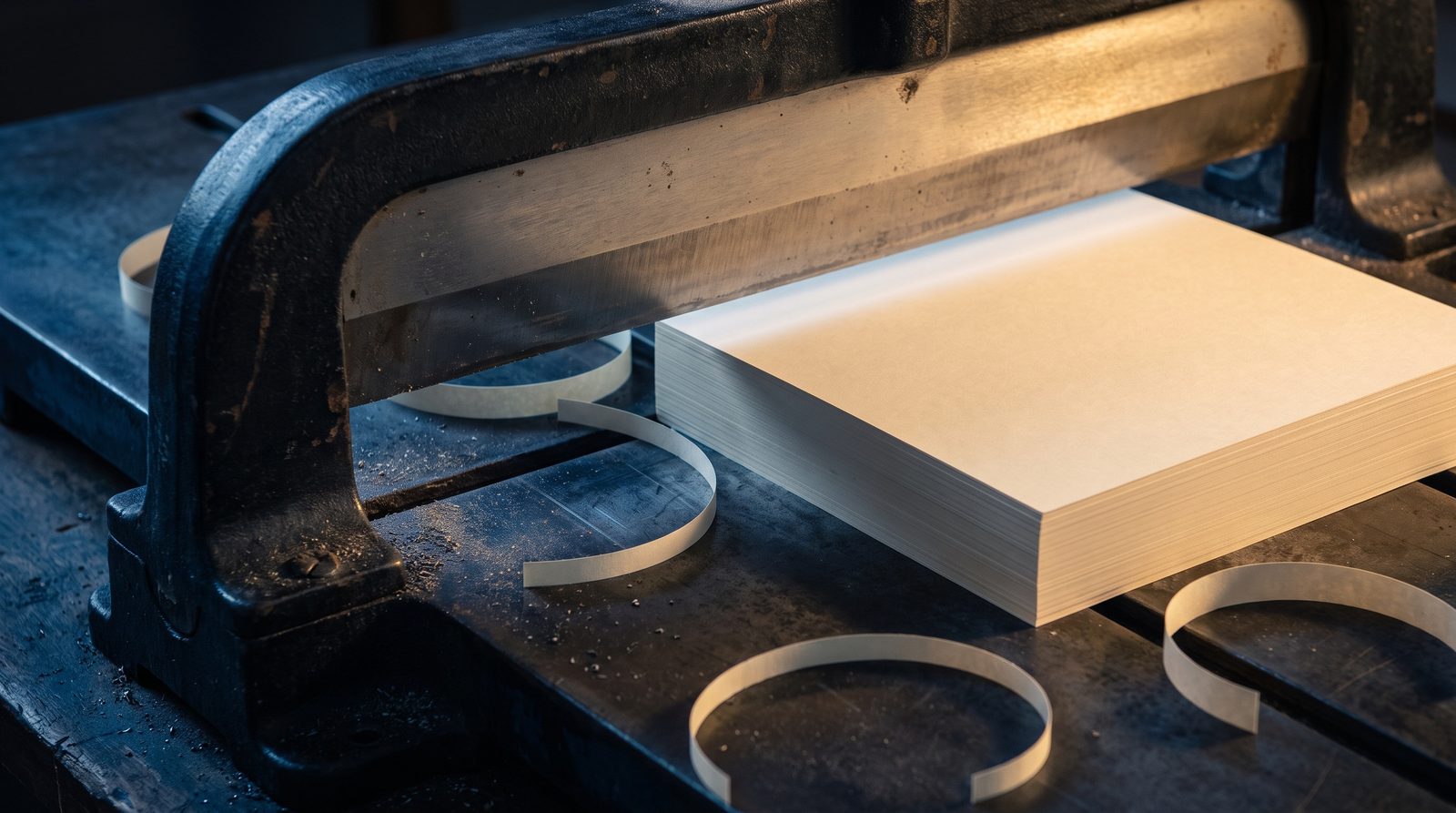
A guillotine blade above a stack of freshly cut cream paper

PRINTING & POST

What a copy costs at every quantity, what postage is to each zone, how long it takes and how to send it back.

HOLLYWOOD METRICS

The definitive mathematical oracle for cinematic success and creative script intelligence.

74,000+ Films100 Years1.1M+ Reviews
PRODUCT
  • Dashboard
  • Pricing
  • Script Analysis
  • Watch the Demo
  • The Red List
  • News
  • Analytics
  • API
  • MCP Connector
COMPANY
  • About
  • Track Record
  • Trust & Script Privacy
  • Privacy Policy
  • Terms of Service
CONNECT
  • ▶YouTube
  • ◉Instagram
  • ♪TikTok
  • @Threads
  • fFacebook
Get Started Free →
© 2026 Hollywood Metrics. All rights reserved.Powered by bespoke agents and autonomous agentic workflows